
Rising Main Cleaning Case Study
Removing accumulated sediment from a long wastewater rising main.
An industry-first trial developed with Yorkshire Water and Morrisons Water Services tested whether an engineered gel could remove debris from a rising main while using the existing effluent as the pumping medium.
The problem
When a rising main loses its ability to self-cleanse, the effects extend beyond the pipeline.
The trial rising main had known deposition build-up, poor pump efficiency and a history of flooding events.
Sediment accumulation can reduce the effective pipeline bore and pumping capacity. Increasing resistance places additional demand on the pumping system and can leave the network less able to maintain a self-cleansing condition.
Cleaning a wastewater rising main is also difficult. Many assets cannot be conventionally pigged, access may be limited and any intervention has to operate within existing pumping and treatment infrastructure.
Pump efficiency
Reduced pumping capacity
Energy costs
Greater demand on pumps
Asset reliability
Reduced operational resilience
Pollution risk
Higher consequence of system failure
Blockages
Accumulated material remains in the system
Maintenance
Recurring operational cost
The trial objective
Could a gel remove debris without adding pressure or disrupting normal treatment?
The mission was to prove that an engineered gel could travel through the rising main, capture accumulated sediments and improve the internal condition of the pipeline.
The trial needed to:
- Remove accumulated sediments.
- Increase the effective pipeline bore.
- Use effluent as the pumping medium.
- Avoid additional pressure loading.
- Avoid creating blockages.
- Operate with a low manpower requirement.
- Allow efficient stop/start pumping.
- Recover material through the existing treatment-works route.
Trial highlights
A live-network trial built around a difficult operational challenge.
Engineering the gel
How do we choose the right gel?
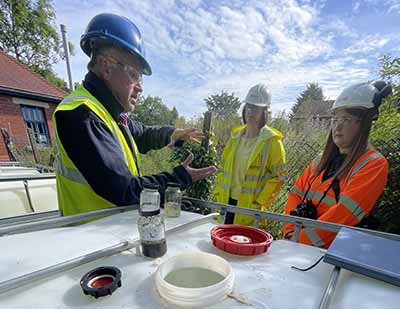
The gel is selected around the pipeline and the debris, not the other way around. At least nine application factors were considered before the design of the gel.
01
Pipeline condition
02
Diameter & length
03
Location
04
Debris volume
05
Operating pressure
06
Chemical interaction
07
Debris type
08
Viscosity
09
Route of disposal
Why this matters:
Pipeline condition can influence the viscosity selected. Where an asset requires a more progressive lift, other gel forms can be considered. The gel is engineered to capture and lock in sediment within its mass as it travels whilst not creating 'back pressure' that could damage the pipeline.
Deployment
A small operational footprint for a long pipeline.
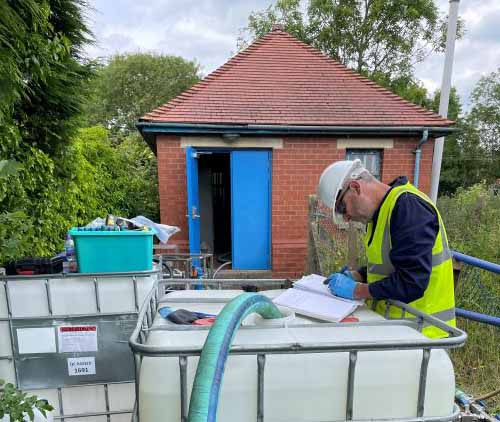
The trial covered more than 4km of mostly 225mm diameter rising main in a rural location with limited access.
Gel and water were injected at the pumping station. Effluent was then continuously added to the wet well to drive the gel train through the rising main towards the treatment works.
Strategic planning reduced the expected transit time substantially, allowing the cleaning train to pass through the system within the operational trial window.
The trial deliberately used the wastewater network's own effluent as the principal propulsion medium, demonstrating a method designed to work with existing infrastructure rather than requiring a separate high-pressure cleaning system.
Designed around the live system
Gel train
Multiple stages helped maximise sediment lift while controlling pressure.
Sediment loading
The expected volume of sediment was greater than the gel volume, so the gel was expected to become heavily saturated.
Water stages
Water was incorporated to capture and remove sediments lifted during the cleaning process.
Visual tracking
Dye provided a visual indicator while samples were taken before, during and after the trial.
Trial results
Clear evidence of sediment removal and improved performance.
The recovered gel and sampling programme showed that significant material had been mobilised and removed from the rising main.
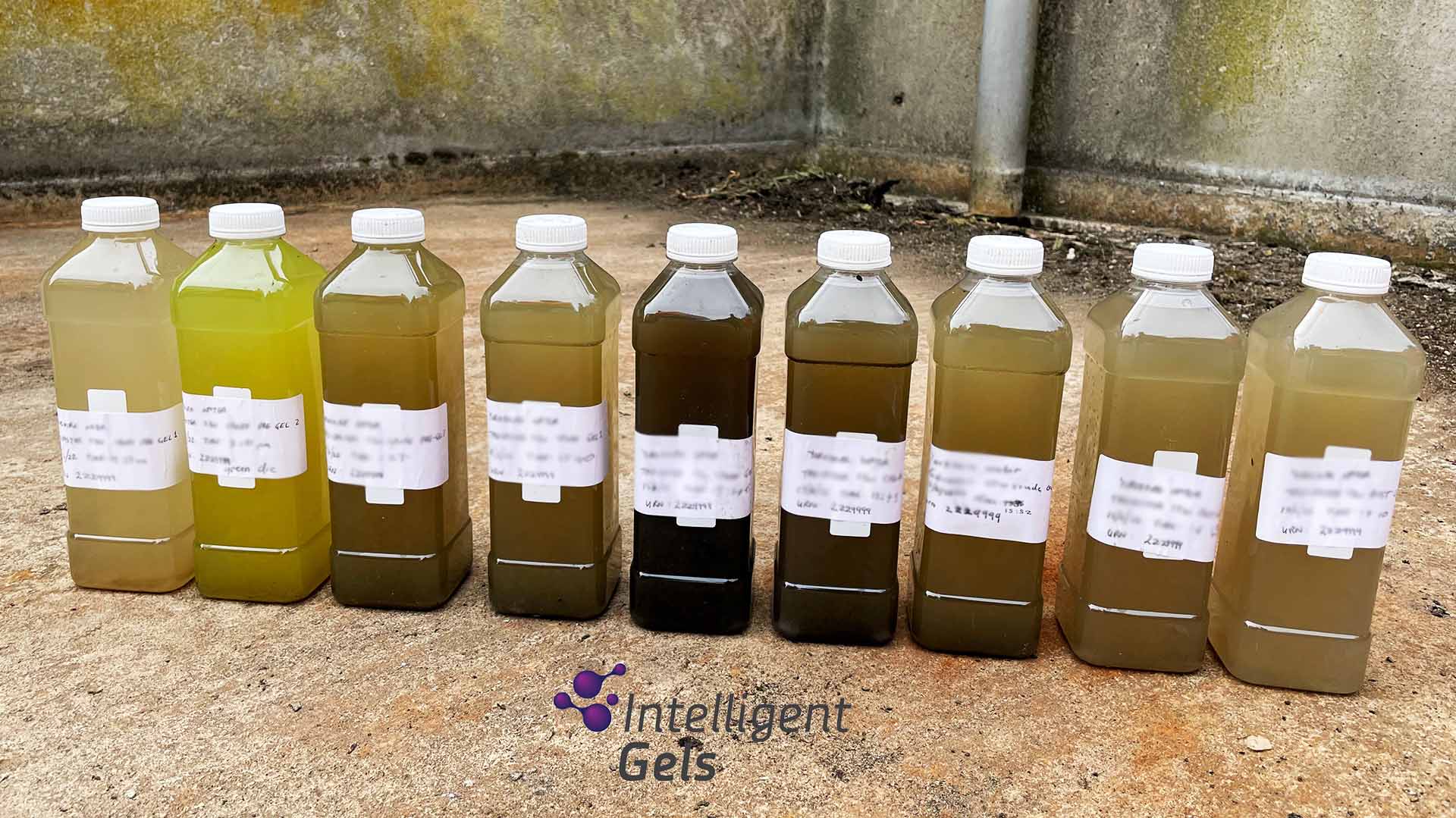

Recovered gel was heavily loaded with sediment removed from the pipeline.

Visual analysis showed a significant quantity of accumulated material had been removed from the rising main.

The gel successfully transported larger stones as well as finer suspended sediments.

The cleaning programme was completed without additional pressure loading on the rising main.

Laboratory results returned towards normal levels following completion of the cleaning sequence.

Post-cleaning pump data indicated improved operating performance following removal of accumulated solids.
Overall result
The evidence showed a cleaner rising main.
Sediment was visible in the samples, recovered gel and balancing tank. The gel and sedimented effluent were collected for onward processing at a larger treatment works.
Laboratory validation
Samples were analysed throughout the trial.
The sampling programme was designed to understand both the material being removed and any immediate impact on the receiving treatment process.
Alkalinity
BOD
COD
Conductivity
Ammonium
Oil & Grease
pH
Sulphide
COD & BOD
COD and BOD increased in the initial gel samples as dislodged material was suspended, then reduced as the cleaning sequence progressed.
Sulphide
Sulphide was elevated before gel cleaning and decreased through the gel-pigging sequence, consistent with removal of accumulated material.
pH
The trial data indicated that pH was not influenced by the gel.
Pump performance
Removing solids was reflected in post-cleaning energy performance.
Post-cleaning pump data showed an improvement in performance consistent with material being removed from the rising main.
Although the trial experienced issues with online flow monitoring, the recovered saturated gel and subsequent pump behaviour provided positive evidence that a significant sediment load had been removed.
The wider benefit
Reducing sediment within a rising main has the potential to support lower energy demand, improve asset performance, extend pipeline life and reduce the likelihood of pollution events.
What the trial demonstrated
A practical new cleaning route for difficult rising mains.
The trial demonstrated that an engineered gel could travel through a long wastewater rising main, capture substantial sediment and be recovered through the treatment system without increasing line pressure.
The evidence supports further use of gel cleaning as an operational technique for networks where accumulated sediment is affecting pumping efficiency, asset reliability or network resilience.
Start a conversation
Is sediment affecting the performance of a rising main?
Share the pipeline length, diameter, pumping arrangement, access points and known performance problem. We can assess whether gel cleaning provides a practical intervention.