
Cleaning a heavily contaminated legacy water main.
The innovation trial tested whether gel cleaning could recover a severely contaminated 6-inch lined cast-iron main that had been stagnant for more than 20 years.
Three gel passes produced substantial water-quality improvement
 99.1%Iron reduction10.57 → 0.094 mg/L
 90.5%Manganese reduction0.0884 → 0.0084 mg/L
 98.6%Turbidity reduction56.4 → 0.78 NTU
 99.4%PAH sum4 reduction4.99 → 0.030 µg/L
Hydrant-to-hydrant deployment with controlled recovery.
The drinking-water process uses a soft, conformable gel slug propelled with controlled water flow. The aim is to contact the full internal bore, capture mobilised deposits and recover the gel and debris at a planned exit point.
1. Isolate
Select and isolate the main section to be cleaned. The project is planned around the asset, access points, pipe diameter and length, hydraulic conditions and the required return-to-service controls.
2. Inject
Introduce the selected gel through an existing hydrant or suitable fitting. Compact pumping equipment allows deployment from established network access points.
3. Propel
Use controlled water flow already available in the network to move the gel through the isolated main, rather than depending on sustained high-velocity flushing alone.
4. Contact & capture
The soft gel conforms to the full bore, providing 360° wall contact. Iron, manganese, sediment and other loosened deposits are lifted, captured and carried within the cleaning train.
5. Recover
Recover the gel and captured debris at the designated exit point, keeping removed material contained rather than simply mobilising it further downstream.
6. Verify & return
Flush and sample the cleaned section against the agreed water-quality and operational acceptance criteria before the water company returns the asset to service.
Trial and deployment images.
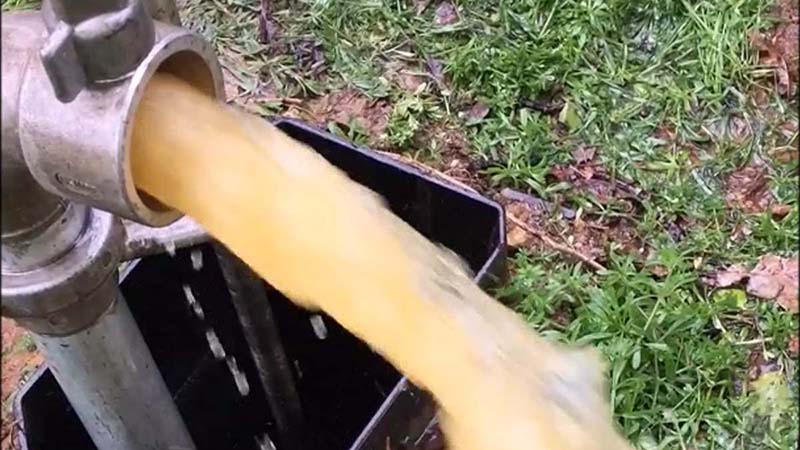
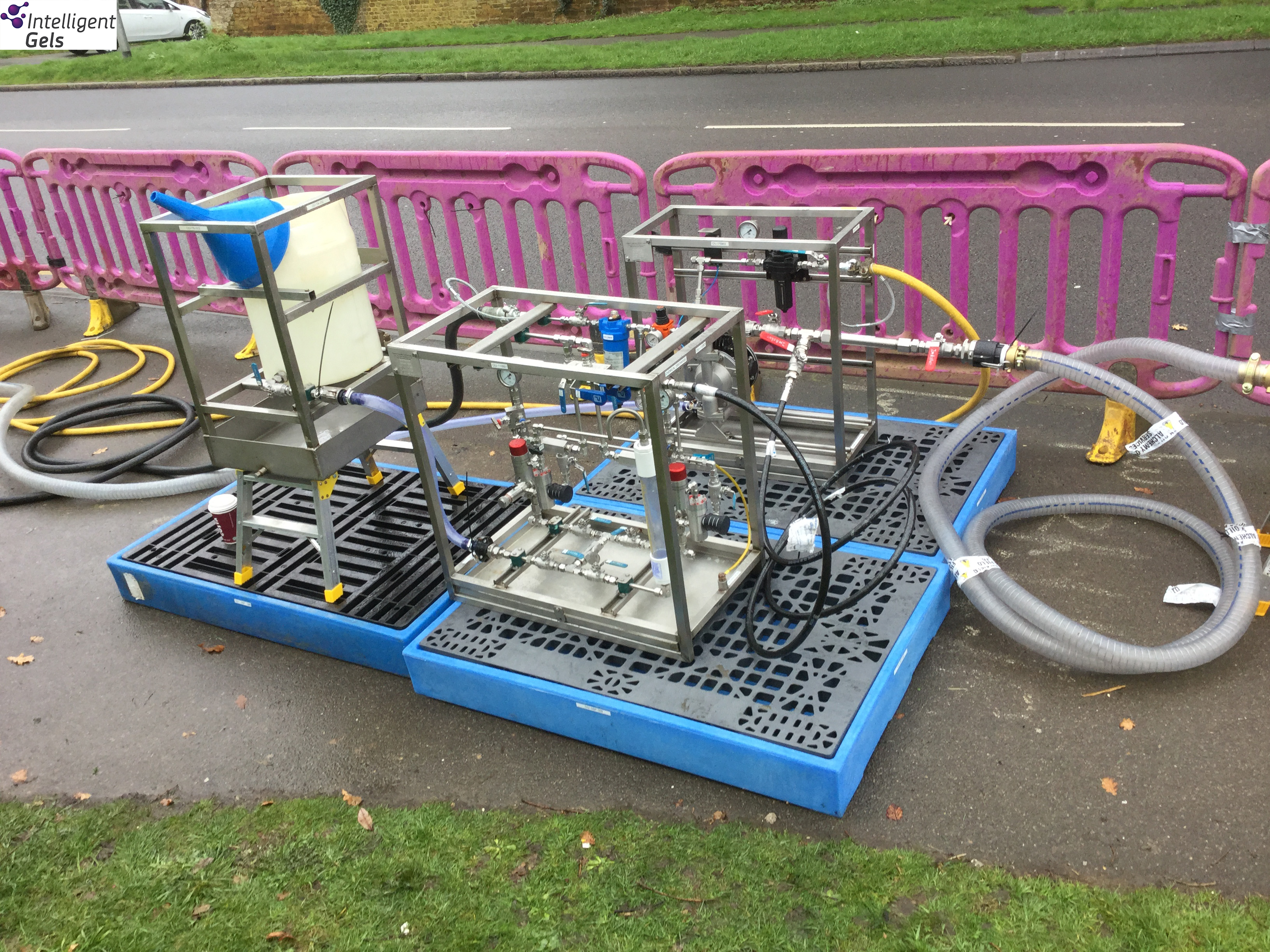
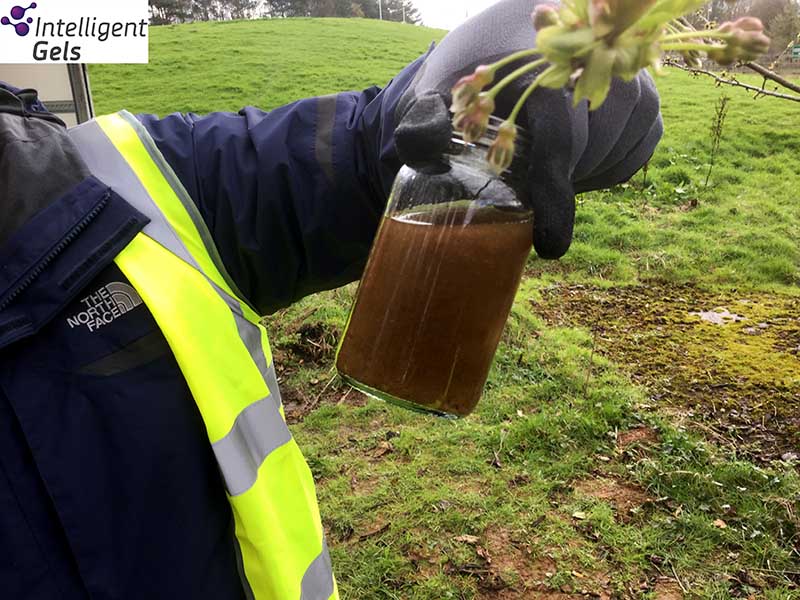
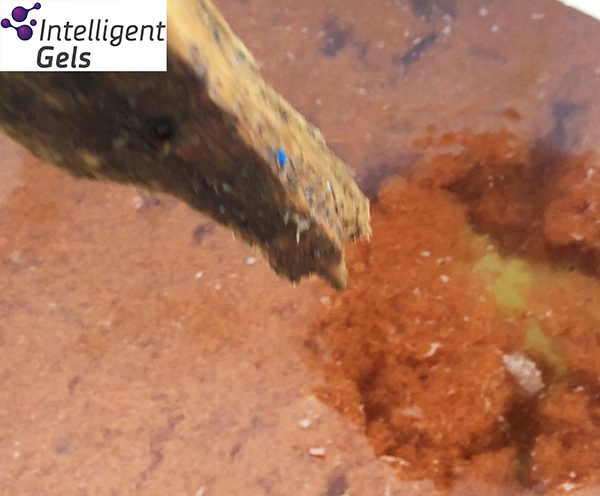
A very effective method of capturing debris
The trial demonstrated that a viscous gel could contact and remove dense deposits from a severely contaminated lined cast-iron main, with substantial improvement across all the measured indicators.
There was also no impact on PAH levels from damaged lining and the turbidity tests showed the water quality returned to normal after the gel slug had been removed from the pipeline, saving vast quantities of clean water.
Have a drinking-water main where the conventional approach is not working?
Tell us the material, diameter, length, deposit problem and operational constraints.